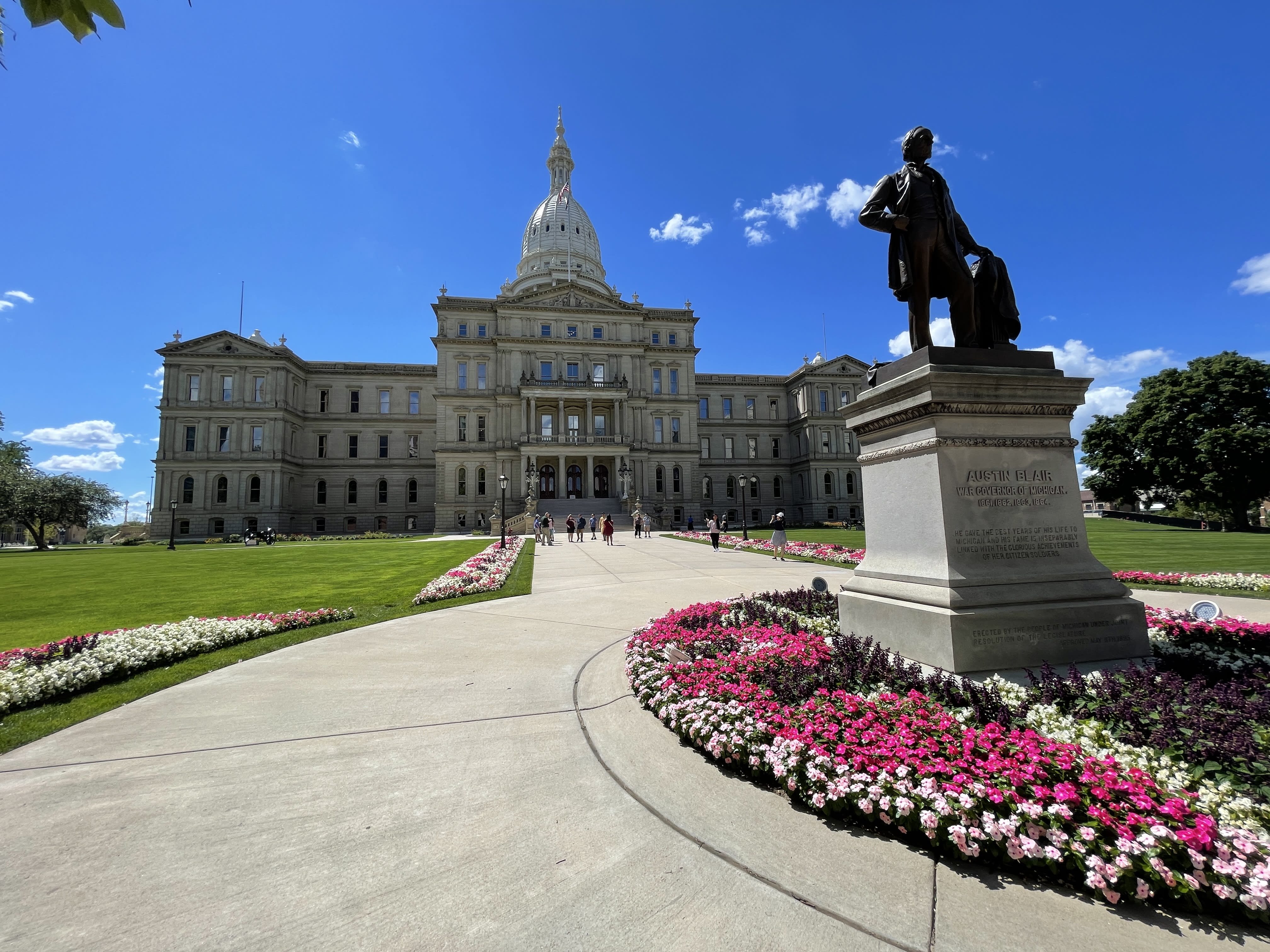
Living in DeWitt, Michigan
A Guide to the City of DeWitt & DeWitt Charter Township
Just north of Lansing, DeWitt offers an interesting combination of small-town character, established neighborhoods, newer residential development, parks and trails, community traditions, and convenient connections throughout Greater Lansing.
Over the years, I’ve watched the DeWitt area grow considerably. New neighborhoods and residential development have expanded housing choices, while parks, walking trails, recreation facilities, schools, local businesses, and community amenities have continued to play an important role in the area.
DeWitt has also been a community I’ve frequently discussed with people relocating to Greater Lansing. Buyers looking for newer construction and more upscale neighborhood choices often include DeWitt in their search, along with communities such as Okemos. But DeWitt has developed an identity all its own.
One of the things Sharon and I have always enjoyed about Greater Lansing is how connected our communities are. You can live in a community with its own character and still have convenient access to much of the Greater Lansing area. DeWitt is a good example.
Whether you're considering a move to DeWitt, already own a home here, or are beginning to think about selling or making a future housing transition, this guide is designed to help you get to know the community and the resources available to you.
Welcome to DeWitt
Spend some time in DeWitt and you'll quickly discover that there is more here than subdivisions and convenient access to Lansing.
Downtown DeWitt provides a recognizable community center, with local businesses, gathering places, community events, and the Looking Glass River helping give the area its own sense of place.
Throughout the year, community traditions and events bring residents and visitors together. Events such as the Ox Roast, Music in the Park, car shows, and the Mint Festival have all become part of the broader DeWitt experience.
Outdoor recreation is another important part of the community. Parks, trails, playgrounds, athletic facilities, river access, and other recreational opportunities can be found throughout both the City and Township.
As DeWitt has grown, I believe these amenities have become increasingly important. Housing is only one part of choosing a community. The parks you walk through, places you gather, schools and library you use, and connections you make within the community all contribute to what it is like to live there.
And there is something important to understand when we talk about “DeWitt.”
DeWitt isn't just one municipality.
Understanding DeWitt: City or Township?
People frequently use the name “DeWitt” to describe the overall community, but the City of DeWitt and DeWitt Charter Township are separate municipalities.
That distinction can be important when you're considering buying or selling a home.
The City of DeWitt includes the traditional downtown area along with residential neighborhoods, municipal parks, city services, and other community resources.
DeWitt Charter Township encompasses a considerably larger geographic area surrounding and extending beyond the City. Within the Township you'll find a mixture of residential development, commercial areas, parks and recreation facilities, and areas with suburban and more rural characteristics.
Although they are separate municipalities, the City and Township share many community connections. Recreation is one example. The DeWitt Area Recreation Authority provides programs serving both the City and Township, and the communities have worked cooperatively on broader recreation planning.
For homeowners and homebuyers, however, a DeWitt mailing address does not necessarily tell the whole story.
Depending upon the property's location, municipal services, property taxes, utilities, zoning, and other considerations may differ. School district boundaries should also be verified for an individual property rather than assumed based solely upon its mailing address.
That's why I encourage buyers to look beyond the name on the listing and understand exactly where a property is located and which services apply to it.
The distinction doesn't make one choice better than another. It simply means that when you're considering a home in the DeWitt area, it's worthwhile to understand the community—and the municipality—you'll actually be calling home.
Downtown DeWitt & Main Street
One of the features that helps give DeWitt its identity is its traditional downtown.
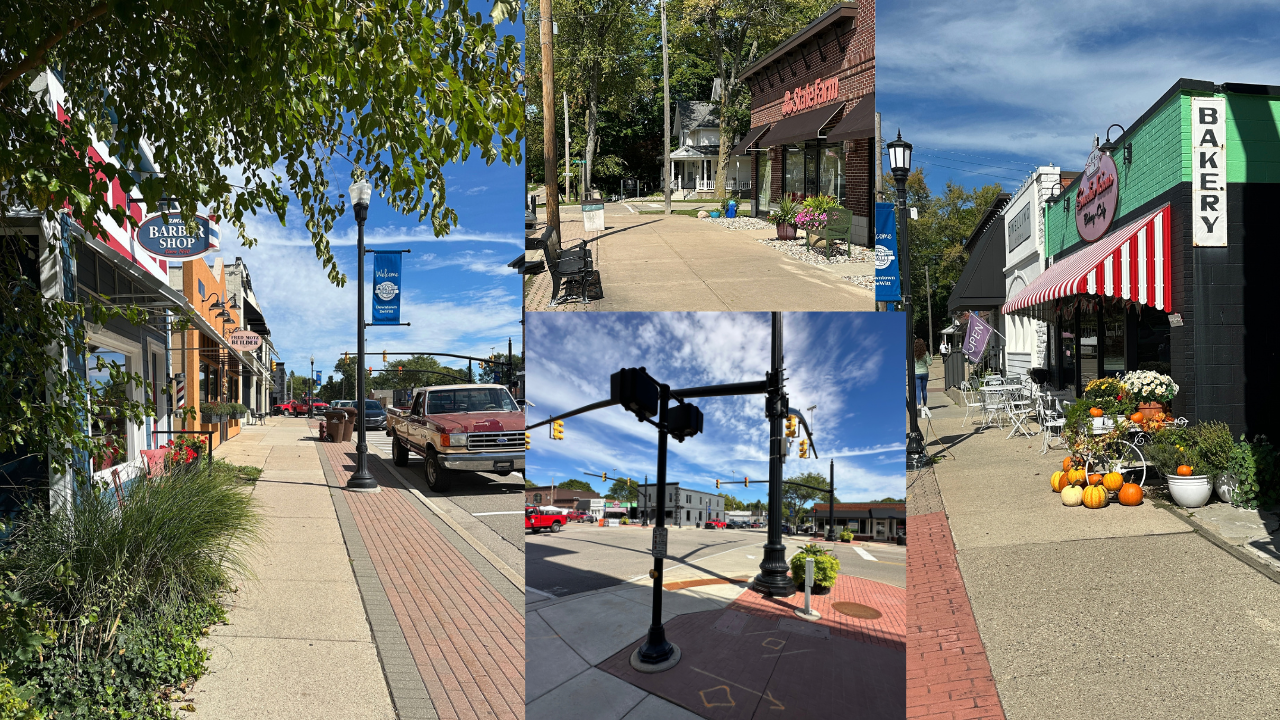
The area around Main Street and Bridge Street provides a recognizable center for the community, with locally owned businesses, restaurants, professional services, community activities, and places where people can gather. It is compact enough to explore on foot and provides a very different atmosphere from the larger commercial corridors found elsewhere in Greater Lansing.
For me, that is part of DeWitt's appeal.
As the surrounding area has grown and new neighborhoods have developed, downtown has remained an important connection to the community's small-town roots. You can see the history of DeWitt in the older buildings and street layout while also seeing newer businesses, improvements, and activities that keep downtown relevant today.
A Place to Gather
Downtown is more than a collection of storefronts.
Throughout the year, community events bring people into the heart of DeWitt. Farmers markets, car shows, seasonal activities, music, and other community gatherings help make downtown a place where residents and visitors have reasons to return.
That community activity also connects naturally with nearby parks and the Looking Glass River. Within a relatively small area, you can move from downtown businesses and restaurants to parks, walking areas, community events, and riverfront scenery.
It is one of the things I notice when spending time in downtown DeWitt: you don't have to travel very far to experience several different sides of the community.
Local Businesses Are Part of the Community
Another part of downtown DeWitt's character is its mixture of independent restaurants, shops, and service businesses.
Businesses will naturally change over time, which is why I don't think a community guide should simply provide a long directory of places to eat or shop. What is more important is that downtown continues to provide space for locally operated businesses and community gathering places.
For someone considering a move to DeWitt, spending a little time downtown can tell you something that housing statistics cannot.
Walk Main Street and Bridge Street. Visit a local business. Stop for something to eat. Attend a community event. Walk toward the river or one of the nearby parks.
It is a simple way to begin understanding the personality of DeWitt before you ever start comparing individual homes and neighborhoods.
Small-Town Character Within Greater Lansing
Sharon and I have always appreciated that Greater Lansing gives us the opportunity to enjoy communities with very different personalities without having to travel great distances between them.
DeWitt illustrates that particularly well.
Downtown retains a small-town setting and community identity, while residents remain connected to the employment, education, healthcare, shopping, entertainment, and other resources available throughout the Greater Lansing area.
That combination—having a recognizable hometown center while still being connected to a larger metropolitan area—is an important part of the DeWitt story.
DeWitt Neighborhoods & Housing
One of the things I've watched change significantly over the years is the amount and variety of residential development in the DeWitt area.
What was once a much smaller community has expanded with new subdivisions, custom homes, established neighborhoods, condominium and attached-housing choices, and residential development extending throughout portions of DeWitt Charter Township.
At the same time, DeWitt hasn't developed with just one type of neighborhood.
Depending on where you look, you'll find older neighborhoods closer to downtown, traditional subdivisions, newer developments, larger homesites, and areas of the Township where the surroundings become considerably more open and rural.
That variety is one reason I encourage buyers to explore more than a single neighborhood before deciding what “living in DeWitt” means to them.
A Community I've Watched Grow
Having worked in Greater Lansing real estate for more than four decades, I've had the opportunity to watch communities change through multiple housing and economic cycles.
DeWitt's residential growth has been particularly noticeable to me.
New construction has played an important role in that growth, creating additional housing choices and expanding the community beyond its older residential core.
I've also seen DeWitt become a community frequently considered by people relocating to the Greater Lansing area.
Over the years, when I've worked with transferees looking for newer homes, upscale neighborhoods, or newer construction, DeWitt has often been part of the conversation. Okemos has traditionally been another area considered by some of these buyers, although the communities offer distinctly different settings and housing choices.
That doesn't mean DeWitt is the right choice for every buyer—and it doesn't need to be.
My approach has always been to help people understand their choices so they can decide which community, neighborhood, and home best fit their priorities.
Newer Homes and Established Neighborhoods
It's easy to focus on DeWitt's newer construction, but that tells only part of the housing story.
Established neighborhoods closer to the City center offer a different environment from many of the newer developments. Mature landscaping, proximity to downtown, parks, schools, and community amenities can all become considerations.
Move farther into DeWitt Charter Township and the housing environment changes again. Depending on location, buyers may encounter newer subdivisions, larger lots, different housing styles, and areas with a more suburban or rural character.
These differences are important when comparing properties.
Two homes may both carry a DeWitt mailing address while providing very different surroundings, municipal services, lot characteristics, tax considerations, utilities, and access to community amenities.
That's another reason understanding the distinction between the City and Township matters when shopping for a home.
More Than the House Itself
One of the changes I've seen in real estate over the years is how much attention buyers give to what surrounds the home.
The house still matters, of course. But so do parks, walking and biking opportunities, recreation facilities, schools, community gathering places, access to shopping and services, and the ability to reach other parts of Greater Lansing conveniently.
I think that's particularly relevant to DeWitt.
As residential development has expanded, parks, trails, recreation facilities, and other community amenities have become an increasingly visible part of the area's identity.
For someone relocating from another part of Michigan—or another part of the country—that broader community picture can be just as important as the number of bedrooms or the size of the garage.
Choosing the Right Part of DeWitt
If you're considering buying a home in DeWitt, I recommend beginning with your priorities rather than simply searching by price.
Think about the type of neighborhood you prefer.
Do you want to be closer to downtown? Are you interested in newer construction? Would you prefer an established neighborhood with mature surroundings? Are you looking for more land? How important are parks and trails? Where will you be commuting? Are you planning only for today's housing needs, or should the home work for you through your next stage of life as well?
Those questions can quickly narrow the search.
It's also important to verify the details of an individual property—including municipality, school district, taxes, utilities, zoning when relevant, and any homeowner association requirements—rather than making assumptions based on the DeWitt mailing address.
A home purchase is more than choosing a house.
It's choosing the location, surroundings, community, and housing situation that work together for you.
DeWitt Public Schools
Schools are an important part of the DeWitt community and often one of the subjects people want to learn more about when they are considering a move.
DeWitt Public Schools serves students from preschool through 12th grade. The district currently reports approximately 3,100 students, with school buildings organized by grade level.
The district includes:
Fuerstenau Early Childhood Center — preschool and childcare programs
Schavey Road Elementary — Young 5s, kindergarten and first grade
Scott Elementary School — second and third grades
Herbison Woods Elementary — fourth and fifth grades
DeWitt Middle School — sixth through eighth grades
DeWitt High School — ninth through twelfth grades
This structure means students may transition through several different buildings as they progress through the district.
Schools as Part of the Community
One thing you notice when traveling around DeWitt is that the schools are very much a visible part of the community.
School activities, athletics, extracurricular programs, performances, and other events provide opportunities for students and families to participate in community life. The Panther identity is also something you'll see represented throughout the area.
As I've watched DeWitt grow over the years, residential development and the school community have both been part of the area's changing landscape.
For someone relocating to Greater Lansing, however, I think it's important to look beyond a community's reputation or what someone else tells you about a particular school district.
Families have different educational priorities.
Some may be interested in academics, while others are particularly interested in athletics, arts, extracurricular activities, special education services, transportation, before- and after-school programs, or particular educational opportunities.
The best approach is to research the district directly and decide which factors are most important to your family.
Verify the School District Before Buying
A DeWitt mailing address should not automatically be interpreted as confirmation that a particular property is served by DeWitt Public Schools.
Municipal boundaries, postal addresses, and school district boundaries are different things.
Before purchasing a home, buyers should verify the school district and individual school assignments for the specific property they are considering. Current enrollment requirements, programs, calendars, transportation information, and school policies should also be confirmed directly with the school district.
DeWitt Public Schools currently requires students enrolling as residents to live within district boundaries. The district also periodically offers limited non-resident Schools of Choice opportunities, subject to available openings and district policy.
Those policies can change from year to year, so families interested in enrollment should always obtain the latest information directly from DeWitt Public Schools.
Do Your Own School Research
When I'm helping someone explore a Greater Lansing community, my role isn't to tell them which school district is “best.”
Instead, I encourage buyers to identify what's important to them and use reliable resources to do their own research.
Visit the schools. Talk with district personnel. Review current programs and curriculum. Look at publicly available data. Attend an event if you have the opportunity. Ask questions about the services or programs that matter specifically to your family.
A school decision is personal, and good information helps families make that decision for themselves.
DeWitt Public Schools provides current information about its individual schools, enrollment, district programs, calendars, Board of Education, and other resources through the district's website.
DeWitt District Library
A community library can tell you quite a bit about the community it serves.
The DeWitt District Library is another piece of the community infrastructure that residents may not think about when they first begin looking at homes, but it can become an important resource once they live here.
Today's libraries are about much more than checking out books. They can provide opportunities for learning, research, technology, children's activities, adult programming, community information, and simply having a welcoming place to spend some time.
A Community Resource for Different Stages of Life
One reason I like including libraries in my Greater Lansing community guides is that they serve people at so many different stages of life.
A young family may first discover the library through children's activities and reading programs. Students may use it for research and educational resources. Adults may participate in programs, pursue a new interest, use technology resources, or simply find their next book.
And for older adults, libraries can provide another way to remain connected, continue learning, participate in activities, and stay involved in the community.
That makes a library more than another building on a community map.
It's part of the network of resources that helps connect people to where they live.
Looking Beyond the House
When people begin a home search, it's natural to concentrate on the house itself—the floor plan, number of bedrooms, kitchen, garage, lot, and price.
Those things matter.
But after you've lived somewhere for a while, your experience of the community is also shaped by the places and resources around you.
Where can you take a walk?
Where are the parks?
What community activities are available?
Where can children and adults continue learning?
Where do people gather?
The DeWitt District Library belongs in that larger conversation.
As I've watched the DeWitt area grow, I've become increasingly interested in these community amenities because they help us understand what living somewhere is actually like—not simply what it costs to buy a house there.
Get to Know the Library
If you're considering moving to DeWitt, I encourage you to include the library when you're exploring the community.
Stop in and look around. Learn about current programs and resources. See what's happening on the calendar.
It's another simple way to get beyond the real estate listings and begin experiencing DeWitt as someone who actually lives here might experience it.
Parks, Trails & the Looking Glass River
As I've watched the DeWitt area grow, one of the things that stands out to me is the role parks, trails and recreation have come to play in the community.
These aren't limited to one large community park. Recreational opportunities are spread throughout both the City of DeWitt and DeWitt Charter Township, providing places to walk, play, gather, enjoy the outdoors and participate in organized recreation.
The Looking Glass River adds another dimension. It winds through the area and connects several of DeWitt's outdoor spaces with a natural feature that has been part of the community for generations.
Parks in the City of DeWitt
Within the City, parks are woven into the community rather than being separated from it.
Riverside Park, located along Bridge Street, is a good example. Its location near downtown makes it easy to experience the park as part of a visit to the community rather than as a separate destination. With picnic and playground facilities and the Looking Glass River nearby, it provides a natural transition between downtown DeWitt and the outdoors.
Across Bridge Street, Memorial Park and its gazebo provide another community gathering space. River Trail Park, McGuire Park and the City's Sports Park add additional recreation opportunities in different parts of the community.
McGuire Park is also undergoing improvements that include new pickleball courts, adult fitness equipment and improved river access—another example of how DeWitt's recreational facilities continue to evolve.
DeWitt Charter Township Parks
Move beyond the City limits and DeWitt Charter Township adds an extensive park system of its own.
The Township maintains approximately 200 acres of park property, ranging from smaller neighborhood spaces to larger recreation areas.
Granger Meadows Park is one of the most substantial. Its trails, recreation facilities, playground, picnic areas and seasonal activities provide opportunities throughout the year. A paved, lighted trail connects Granger Meadows with nearby Valley Farms Park, extending the recreational area beyond a single park.
Valley Farms provides additional athletic fields, recreation facilities and gathering spaces.
Looking Glass Riverfront Park offers a different experience. Located along the Looking Glass River, the park provides river access, picnic areas, an observation deck and a canoe and kayak launch.
Together, these parks illustrate something important about DeWitt: recreation isn't confined to one location or one type of activity.
Walking, Trails and Everyday Recreation
Not everyone uses a park for organized sports.
Sometimes the attraction is simply having a place to walk, ride a bike, take the children to a playground, meet someone for a picnic, spend time near the river, or enjoy being outdoors.
I think those everyday opportunities have become increasingly important as the DeWitt area has grown.
When people are choosing a home, it's easy to concentrate on square footage, bedrooms, kitchens and garages. But after the move, the things surrounding the home become part of everyday life.
Having parks, trails and recreational opportunities nearby can contribute to how people experience their community long after the moving boxes are gone.
Recreation That Connects the City and Township
Parks and recreation also provide a good example of how the City of DeWitt and DeWitt Charter Township can remain separate municipalities while working together on community resources.
The DeWitt Area Recreation Authority provides recreational and leisure programming serving residents of both the City and Township.
That cooperative approach is continuing as the area plans for the future.
The City of DeWitt, DeWitt Charter Township and the DeWitt Area Recreation Authority are currently working together to update the DeWitt Area Parks & Recreation Plan. Community input is being gathered to help guide parks and recreation priorities for the next five years.
I think that is worth noting.
DeWitt has experienced considerable residential growth during the years I've worked in Greater Lansing real estate. Planning for parks, trails and recreation alongside that growth is an important part of planning for the community itself.
Get Out and Explore DeWitt
If you're considering moving to DeWitt, I recommend doing something beyond driving through neighborhoods and looking at homes.
Spend a little time in the parks.
Walk along the river. Explore a trail. Visit Riverside Park while you're downtown. Drive through some of the Township recreation areas. See where people gather and how the different parts of the community connect.
A home search can tell you a great deal about the real estate available in DeWitt.
Getting out of the car and exploring can tell you much more about what it might be like to live here.
Recreation & Outdoor Life in DeWitt
Parks and trails provide the setting, but recreation in DeWitt goes well beyond having places to visit.
One of the things I like about the DeWitt area is the variety of ways people can participate in the community. Organized sports, fitness activities, camps, classes, walking, biking, pickleball, playgrounds, river activities and community events provide opportunities for different ages, interests and stages of life.
That makes recreation another part of DeWitt's overall community character.
DeWitt Area Recreation Authority
An important piece of that recreational network is the DeWitt Area Recreation Authority, commonly known as DARA.
DARA was created through cooperation between the City of DeWitt and DeWitt Charter Township and provides recreational programming for residents throughout the DeWitt area.
Programs change throughout the year, but offerings can include youth sports, camps, after-school activities, classes and special events, along with programs designed for adults and older adults.
I particularly appreciate that recreation isn't viewed as something intended only for children and organized youth sports.
Staying active, learning something new and remaining connected to other people can be important throughout life.
Recreation for Different Ages and Abilities
Another important part of DeWitt's recreation story is the effort to provide opportunities for people with different abilities.
DARA includes adaptive and inclusive programming among its recreational offerings, while accessible recreation facilities can also be found within the broader park system.
That's worth recognizing because a strong community recreation system should provide opportunities for as many people as reasonably possible to participate.
From children's first experiences with recreation to adults looking for ways to remain active and older residents seeking opportunities to stay involved, recreation can help connect generations within a community.
An Active Community Doesn't Require Organized Sports
Of course, you don't have to join a league or register for a program to enjoy outdoor life in DeWitt.
Sometimes it's as simple as taking a walk.
The area's parks and trails provide opportunities for walking, biking, picnicking, playing with the children or grandchildren, enjoying the Looking Glass River, kayaking or canoeing from designated access points, playing pickleball, or simply spending some time outside.
Seasonal recreation is part of the picture as well. Michigan gives us four very different seasons, and the way people use parks and outdoor spaces naturally changes throughout the year.
That's part of what makes having a variety of recreational resources valuable.
Recreation as Part of Everyday Living
When I'm helping someone think about a move, I believe it's useful to look beyond what they need from a house today.
How do you like to spend your time?
Would you use nearby walking trails?
Do you enjoy being around the water?
Would playgrounds or athletic fields matter to your household?
Would you enjoy pickleball, recreation classes or community programs?
Are you thinking about ways to remain active as you get older?
Those questions may not appear on a real estate listing, but they can become very important after you move.
For Sharon and me, one of the benefits of living in Greater Lansing has always been having so many different communities and activities within a relatively short drive. DeWitt adds its own recreation opportunities to that larger Greater Lansing network.
Something for Every Stage of Life
Housing needs change over time, and so can the way we use our community.
A playground that matters when children are young may eventually give way to walking trails, community programs, pickleball, time with grandchildren or simply having an attractive outdoor place nearby.
That's one reason I look at parks and recreation as more than amenities on a community checklist.
They're part of how people live.
And as DeWitt continues to plan for its future, maintaining and developing recreational opportunities for different generations will remain an important part of the community conversation.
Shopping, Dining & Everyday Services
One advantage of living in the DeWitt area is having a combination of locally owned businesses, restaurants, professional services, and everyday shopping within the community, while still having convenient access to the larger Greater Lansing area.
And like the housing in DeWitt, the business community isn't concentrated in just one place.
There are several distinct commercial areas, each serving a somewhat different purpose.
Downtown DeWitt
Downtown is where DeWitt's small-town business character is most visible.
Along Main Street and Bridge Street you'll find a mixture of restaurants, cafés, specialty shops, professional offices, and locally operated businesses.
I think these businesses are important to the character of downtown. They give people reasons to come into the community center for more than a special event.
You can meet someone for coffee, have lunch or dinner, browse a local shop, take care of an appointment, and then walk a few blocks toward the Looking Glass River or one of the nearby parks.
The Downtown DeWitt Farmers Market also brings vendors and visitors into the area seasonally, adding another connection between local businesses, food, and community activity.
Shopping and Services Beyond Downtown
Everyday life, of course, requires more than a traditional downtown.
Other commercial areas throughout DeWitt provide access to groceries, restaurants, medical and dental offices, financial services, personal services, and other businesses residents use regularly.
Schavey Plaza is one of these areas, located west of downtown among residential neighborhoods. It includes a mixture of restaurants, healthcare and professional services, and is also near the DeWitt District Library.
The Business 27 corridor provides another concentration of shopping, restaurants and services. This corridor extends through DeWitt Township and includes a broader mix of retail businesses, restaurants, financial institutions, service businesses and other commercial development.
Together, these areas give residents several options for taking care of everyday needs without relying exclusively on downtown.
Local Convenience With Greater Lansing Nearby
No community needs to contain everything within its boundaries.
That's another reason I've always appreciated the way Greater Lansing is laid out.
Sharon and I have found that you can enjoy the identity and amenities of an individual community while still having much of the Greater Lansing area within a relatively convenient drive.
For DeWitt residents, that expands the choices considerably.
Additional shopping, restaurants, entertainment, healthcare, higher education, cultural attractions and professional services are available throughout Lansing, East Lansing and the surrounding communities.
So when someone asks me about shopping or dining in DeWitt, I don't look at DeWitt in isolation.
There are the businesses and services you can use close to home, and then there is the much larger Greater Lansing network surrounding you.
Explore Local When You Visit
If you're considering moving to DeWitt, spend some time beyond the neighborhoods.
Have lunch downtown. Stop for coffee. Visit the farmers market when it's operating. Explore the businesses along Bridge and Main Streets. Drive the Business 27 corridor and see where the everyday services are located.
These may seem like small things when you're focused on finding a house.
But once you live somewhere, knowing where you like to grab breakfast, buy groceries, meet a friend for coffee, pick up something you need, or enjoy dinner becomes part of your everyday connection to the community.
Those experiences help turn an address into a hometown.
Getting Around & Greater Lansing Access
Location is one of DeWitt's practical advantages.
The DeWitt area sits immediately north of Lansing, with convenient connections to the rest of Greater Lansing and Mid-Michigan. Interstate 69 provides an important east-west route through the area, while U.S. 127 provides north-south access.
For people who live in DeWitt but work, attend school, receive healthcare, shop, or participate in activities elsewhere in Greater Lansing, those connections can make it relatively easy to move between communities.
One of the Things Sharon and I Appreciate About Greater Lansing
One of the things Sharon and I have always enjoyed about Greater Lansing is that so much of the area is within a relatively short drive.
Depending on traffic, construction, weather, and exactly where you're starting and going, we can often get from one Greater Lansing community to another in roughly 20 to 30 minutes.
That has allowed us to enjoy what different communities have to offer without thinking of them as isolated from one another.
You might live in DeWitt, work in Lansing, attend an event in East Lansing, visit friends in Grand Ledge, have dinner in Okemos, and still consider all of it part of everyday life in Greater Lansing.
I think that's an important consideration for someone relocating here.
You don't necessarily have to choose between small-town community character and access to the resources of a larger metropolitan area. DeWitt provides its own community identity while remaining connected to the broader region.
Lansing, East Lansing and Michigan State University
DeWitt's location provides access to two of the region's major activity centers: Lansing and East Lansing.
Lansing is Michigan's capital city and home to state government, major employers, healthcare, entertainment, cultural attractions, restaurants, and other services.
East Lansing adds another dimension to the region, particularly through Michigan State University and the educational, cultural, athletic, research, and employment opportunities associated with a major university community.
For someone relocating to Greater Lansing for employment, this regional accessibility can make DeWitt one of several communities worth exploring.
Access to Major Roads
I-69 and U.S. 127 are especially important to DeWitt's regional location.
I-69 travels east and west through DeWitt Township and provides connections toward communities including Charlotte, Flint, and other parts of Michigan.
U.S. 127 runs north and south through the area, connecting DeWitt with Lansing and East Lansing to the south and communities such as St. Johns to the north.
Business Route 27—often still called Old 27 locally—provides another important north-south route through DeWitt Township and connects many of the area's businesses, neighborhoods, and services.
Having several route choices can be useful for everyday travel as well as longer trips throughout Mid-Michigan.
Capital Region International Airport
Another transportation resource that's easy to overlook is the Capital Region International Airport.
The airport is located in the southern portion of DeWitt Charter Township, providing the Greater Lansing region with commercial passenger service as well as cargo and other aviation services.
For people who travel for business, visit family in other parts of the country, or simply prefer having a regional airport nearby, its location adds another transportation option to the DeWitt area.
Think About Your Own Daily Routine
When you're considering a move, I recommend looking at transportation from a personal perspective rather than relying on a generic statement about commute times.
Where will you work?
How often will you travel to Lansing, East Lansing, Michigan State University, or another Greater Lansing community?
Where are your doctors?
Where do family members live?
What activities are important to you?
And are there certain roads or routes you'll use frequently?
Try driving those routes yourself at the times you're most likely to use them.
A location that works well for one household may be inconvenient for another.
That's why I look at accessibility as another part of choosing the right home—not simply how many miles the property is from downtown Lansing.
For many people, DeWitt's combination of community identity and regional access is part of what makes the area worth considering.
Healthcare & Essential Services
Access to healthcare and essential community services is another practical consideration when choosing where to live.
DeWitt residents have access to primary care, family medicine, dental and other healthcare services within the community, along with urgent-care options for appropriate non-emergency illnesses and injuries.
For more extensive medical needs, DeWitt's location provides access to the larger healthcare networks serving Greater Lansing and Mid-Michigan.
Healthcare Close to Home
Having routine healthcare available within the community can make everyday life more convenient.
DeWitt includes primary-care practices affiliated with major Greater Lansing healthcare systems, as well as independent medical and dental providers and an urgent-care location.
That provides options for routine physicals, preventive care, management of ongoing health conditions, common illnesses and other everyday healthcare needs.
For specialty care, hospital services and more complex medical needs, residents can also look to the broader Greater Lansing healthcare network.
Regional Hospital Access
Living in DeWitt places residents between healthcare resources available in Lansing and those available elsewhere in Clinton County.
Greater Lansing is home to major hospital systems, specialists, diagnostic services, rehabilitation, outpatient facilities and other healthcare resources.
Additional hospital and emergency services are available to the north in St. Johns.
I think this is another example of why DeWitt's location matters.
You can live in a smaller community while still having access to the healthcare resources of a larger metropolitan area.
Emergency & Public Safety Services
Healthcare is only one part of the essential-services picture.
The City of DeWitt and DeWitt Charter Township have their own governmental and public-safety structures, so the agency providing a particular service depends upon where a property is located.
Both communities provide local police services, while fire and emergency-response services are provided through the appropriate City-area or Township organizations.
For someone moving into the area, it's worthwhile to become familiar with which municipality serves your home and where to find current police, fire, emergency, utility and municipal information.
This is another reason the distinction between the City of DeWitt and DeWitt Charter Township matters beyond the name appearing on a mailing address.
Think About Healthcare Before You Need It
Healthcare access can become more important as our circumstances change.
A younger household may be thinking primarily about pediatric or family medicine. Someone managing an ongoing health condition may place greater importance on specialists and hospital access. Older adults may be considering rehabilitation, medical transportation, accessibility and proximity to the doctors they already use.
These needs can also change over time.
When Sharon and I think about housing decisions, we've learned that it's useful to consider not only what works today, but what may become important several years from now.
For someone planning a move, that might mean asking:
Where are my doctors and specialists?
How easily can I reach them?
What urgent and emergency care is available?
Would this location still work if my transportation or healthcare needs changed?
Those aren't necessarily the first questions people ask when they fall in love with a house.
But particularly when you're planning for retirement or thinking about your next stage of life, they can become some of the most important.
Senior Living & Aging in DeWitt
For many people, choosing where to live becomes a different conversation as we get older.
The questions aren't necessarily about finding another house.
They may be about whether the home you're already in continues to work for you.
Can you comfortably manage the property? Is the home accessible? Are important services nearby? Can you remain connected to friends, family and activities? Would some modifications make staying home easier? Or would a different housing arrangement provide greater convenience and fewer responsibilities?
As a Seniors Real Estate Specialist® (SRES®), I've learned that there isn't one answer that's right for everyone.
The important thing is having choices—and beginning the conversation early enough to consider them carefully.
Aging in Place
For many older homeowners, the first choice is to remain in the home they already know and enjoy.
That may be entirely appropriate.
Aging in place can sometimes be made easier through relatively simple changes: improving lighting, reducing fall hazards, adding handrails, modifying a bathroom, reconsidering how rooms are used, arranging help with maintenance, or finding assistance with other everyday needs.
The house itself, however, is only part of the equation.
Transportation, healthcare, family support, home maintenance, social connections and access to everyday services should also be considered.
DeWitt's parks, library, recreation opportunities, healthcare access and connection to the larger Greater Lansing area can all become part of that discussion.
When the House Begins to Feel Like Too Much
There can also come a time when maintaining the home begins taking more time, money or energy than someone wants to devote to it.
I've had many conversations over the years with homeowners who weren't necessarily unhappy with their homes.
They were simply ready for less responsibility.
That can lead to several possibilities: moving to a smaller home, choosing a condominium or lower-maintenance property, moving closer to family, relocating to an independent-living community, or exploring a setting where additional services are available.
Downsizing doesn't automatically mean moving into senior housing.
Sometimes it simply means choosing a home that better fits the next chapter of your life.
Senior Housing and Supportive Living Options
When additional services or support would be helpful, families may begin exploring independent living, assisted living, memory care, adult foster care, or other supportive housing arrangements.
Options are available within the DeWitt area and throughout Greater Lansing.
The terminology can be confusing, and two communities using similar descriptions may provide very different housing, services, staffing and levels of care.
That's why I encourage families to slow the process down whenever circumstances allow.
Tour more than one community. Ask what's included in the monthly cost and what costs extra. Understand what happens if care needs increase. Ask about transportation, meals, activities and accessibility. Review agreements carefully and understand the conditions under which a resident may need to move again.
Most importantly, involve the person making the move in the decisions whenever possible.
Helping a Parent Make a Move
Sometimes the person researching DeWitt isn't the older homeowner.
It's an adult son or daughter.
Those conversations can be difficult because a longtime home represents much more than real estate. It may hold decades of memories, family gatherings, possessions, routines and independence.
I've found that families generally benefit from beginning with questions rather than conclusions.
What does Mom or Dad want?
What's becoming difficult?
What could make the current home work better?
If a move eventually becomes appropriate, what type of setting would provide the right combination of independence, convenience, social connection and support?
You don't have to solve everything in one conversation.
Planning ahead gives families time to explore choices instead of making major housing decisions during a crisis.
Local and Regional Resources
Older adults and caregivers in DeWitt also have access to resources serving Clinton County and the broader Greater Lansing region.
These can include information and assistance, caregiver support, nutrition programs, home and community-based services, transportation resources, benefits counseling and help understanding long-term support options.
Knowing where to begin can sometimes be the hardest part.
A good first step is identifying the particular problem you're trying to solve—housing, transportation, home maintenance, caregiving, healthcare, finances or social connection—and then finding the appropriate resource.
You don't need to navigate every part of aging alone.
Planning for the Next Chapter
Sharon and I have gone through the downsizing process ourselves, so I understand that these decisions can be both practical and emotional.
Preparing for a move after many years in one home involves much more than putting a house on the market.
There are belongings to sort through, decisions about what to keep, family members who may want certain things, repairs or preparation to consider, and sometimes decades of memories attached to rooms and possessions.
Starting early made a difference for us.
We had garage sales, donated items, gave furniture to grandchildren who could use it, cleaned out areas that had accumulated things over the years, and gradually prepared for the move instead of trying to accomplish everything at once.
That's one of the lessons I share with other homeowners:
You don't have to be ready to move to begin planning.
Whether your goal is to remain in your DeWitt home for many more years, downsize eventually, move closer to family, or explore senior housing, understanding your options now can give you more control over the decisions you may make later.
Community Events, Traditions & Gathering Together
One of the things that gives DeWitt its sense of community is the number of events that bring people together throughout the year.
Some are longstanding traditions. Others are smaller seasonal events, concerts, markets and activities that give residents and visitors reasons to spend time downtown, visit the parks and connect with one another.
To me, that's an important part of understanding a community.
You can learn about housing, taxes, schools and parks online. But sometimes you learn more about a place by attending a parade, listening to music in the park, walking through a farmers market or simply watching neighbors stop and talk with one another.
The DeWitt Ox Roast
Few events are as closely associated with DeWitt as the annual DeWitt Ox Roast.
This longtime community tradition brings activities into downtown and Riverside Park and typically includes entertainment, a parade, food, activities for children, arts and crafts, and other festival events.
The Ox Roast has been part of DeWitt for generations, making it more than simply another event on the calendar.
Events like this provide an opportunity for longtime residents, newer families and visitors to share the same community spaces and traditions.
That's one of the things I appreciate about established community events—they help connect the DeWitt of today with its history.
Music in the Park
Summer brings another type of gathering to DeWitt through Concerts in the Park.
Outdoor concerts provide an opportunity to bring a lawn chair, spend an evening outside and enjoy live music in a relaxed community setting.
There is something very simple about that, and I think that's part of its appeal.
Not every community amenity needs to be elaborate. Sometimes having a park, some music and people gathering together on a summer evening is exactly what makes a community feel like home.
Cars, Downtown and Community Activity
DeWitt also has a strong connection between community events and its downtown.
The Downtown DeWitt Cruise-In brings classic and specialty vehicles into the downtown area and combines the car show atmosphere with other downtown activities.
For someone who hasn't spent much time in DeWitt, an event like this provides a very different experience from simply driving through Main Street on an ordinary afternoon.
The streets become gathering places.
Local businesses become part of the activity.
And downtown becomes a destination rather than simply a route from one place to another.
Farmers Markets and Seasonal Traditions
The Downtown DeWitt Farmers Market adds another recurring reason for people to gather.
Local produce, baked goods, specialty items, food vendors and other offerings can change throughout the season, but the market is about more than shopping.
Like many community farmers markets, it also becomes a social activity—a place to run into someone you know, talk with vendors and spend some time downtown.
Other seasonal activities throughout the year add to that rhythm, including fall and holiday events.
The individual event calendar will naturally change from year to year, so anyone planning a visit should check current community calendars for dates and details.
Why Community Traditions Matter
Over my years in Greater Lansing real estate, I've watched communities grow and change.
New homes get built. Businesses open and close. Roads change. New residents arrive.
Traditions can provide continuity through all of that change.
DeWitt has experienced substantial residential growth during my career, but events like the Ox Roast and community gatherings in downtown and the parks help maintain a connection to the community's identity.
I think that balance is important.
Growth can provide new housing, businesses and amenities. Community traditions help remind us that a hometown is about more than development.
It's also about people.
Experience DeWitt for Yourself
If you're thinking about moving to DeWitt, I'd encourage you to visit more than once.
Come downtown on an ordinary weekday.
Then come back during a community event.
Visit the farmers market. Attend a summer concert. Walk through the Ox Roast. Stop by a car show or seasonal celebration.
You'll see a different side of DeWitt each time.
Real estate can show you where you might live.
Experiencing the community can help you understand what living there might actually feel like.
Buying a Home in DeWitt
If you're considering buying a home in DeWitt, I recommend starting with the community rather than immediately starting with individual listings.
Spend some time here.
Drive through downtown and the surrounding neighborhoods. Explore newer residential areas. Visit the parks and trails. Drive through portions of DeWitt Charter Township. See where the schools, shopping, healthcare and everyday services are located.
Then begin thinking about which part of the DeWitt area best fits the way you want to live.
DeWitt offers enough variety that two homes with the same mailing city can provide very different living experiences.
Start With Your Priorities
Before looking seriously at homes, identify what matters most to you.
Are you interested in newer construction?
Would you prefer an established neighborhood with mature trees and landscaping?
Do you want to be closer to downtown?
Would you rather have a larger homesite or a more suburban setting?
Are parks and walking trails important?
Where will you be commuting?
Do you want a condominium or lower-maintenance property?
Are you buying for your needs today, or are you hoping this home will work through another stage of your life?
There isn't one part of DeWitt that's right for everyone.
The objective is to find the combination of home, neighborhood, location and community that works for you.
Look Beyond the DeWitt Mailing Address
As we've discussed throughout this guide, a DeWitt mailing address doesn't necessarily tell you everything you need to know about a property.
The home may be located within the City of DeWitt or DeWitt Charter Township, and school district boundaries don't necessarily follow municipal or postal boundaries.
That can affect several things a buyer should investigate, including:
Property taxes
School district
Municipal services
Water and sewer availability
Zoning
Utilities
Special assessments
Homeowner association requirements, when applicable
These aren't reasons to favor one property over another.
They're simply facts you should understand before making a decision.
Understand Property Taxes Before You Buy
Property taxes deserve particular attention when purchasing a Michigan home.
One mistake buyers sometimes make is looking at what the current owner pays in property taxes and assuming their future tax bill will be approximately the same.
That may not be the case.
Michigan's property-tax system limits annual increases in a property's taxable value while it remains under the same ownership. Following a transfer of ownership, however, the taxable value generally becomes uncapped for the following tax year and is recalculated under Michigan law.
As a result, the seller's current tax bill may not be a reliable estimate of what a new owner will eventually pay.
Before buying, I recommend obtaining a reasonable estimate based on the property's location, expected value, applicable millages and whether it will qualify as your principal residence.
It's much better to understand that number before purchasing than to be surprised afterward.
New Construction Requires Its Own Due Diligence
Because DeWitt has experienced considerable residential growth, buyers may also encounter new construction or relatively newer homes during their search.
Buying new construction is different from buying an existing home.
Look beyond finishes, countertops and floor plans.
Understand what is included in the purchase price and what is considered an upgrade. Review landscaping, appliances, window treatments, decks and patios, driveways and other items that may or may not be included.
If the property is part of a homeowners association, understand the association documents, fees and restrictions.
Also consider the neighborhood itself.
Is construction still underway? What additional phases are planned? Are nearby parcels expected to be developed? Who maintains roads or common areas? Are there future assessments or infrastructure costs you should investigate?
A new home can be an attractive choice, but “new” doesn't eliminate the need for careful research.
Think About Resale Before You Buy
Even when you're buying a home you expect to keep for many years, I think it's wise to consider resale.
Circumstances change.
Jobs change. Families grow. Children leave home. Health needs change. Retirement arrives. Sometimes people simply decide they want something different.
That's why I encourage buyers to think about factors such as location, floor plan, lot characteristics, neighborhood, condition and features that may affect the home's future marketability.
You don't have to buy a home based entirely on what the next buyer might want.
But you shouldn't ignore resale considerations either.
Relocating to Greater Lansing?
Over the years, I've worked with many people relocating into the Greater Lansing area, and DeWitt has frequently been one of the communities they wanted to explore.
For someone unfamiliar with the area, my recommendation is not to choose a community based solely on what you've heard from someone else.
Explore several.
DeWitt, Okemos, Haslett, East Lansing, Grand Ledge, Delta Township, Holt and other Greater Lansing communities each offer different housing choices and community environments.
Spend some time in them.
Then decide which feels most compatible with your priorities.
That's one of the advantages of Greater Lansing: many of our communities are close enough together that you can realistically explore several before deciding where you want to concentrate your home search.
Buy With the Next Chapter in Mind
One final consideration is something I've come to appreciate more over the years.
Try not to think only about the house you need today.
Think about how long you expect to live there and what may change during that time.
Would stairs eventually become an issue?
Could a first-floor bedroom or bathroom become important?
How much property maintenance do you want?
Will you still want the same size home ten or fifteen years from now?
How close do you want to be to healthcare, family, recreation and everyday services?
Not every home needs to work forever.
But thinking a little farther ahead can sometimes help you make a better decision today.
Make an Informed DeWitt Home Purchase
Buying a home involves much more than finding a property you like online.
It's understanding the property, neighborhood, municipality, costs, services and community—and then deciding whether all those pieces work together for you.
That's the approach I believe in.
Don't rush the decision.
Ask questions.
Verify the details.
Understand what you're buying.
And choose the home that makes sense for your circumstances, priorities and plans.
Selling a Home in DeWitt
Selling a home in DeWitt involves more than putting a sign in the yard, taking some photographs and choosing a price.
Every property enters the market with its own competition.
A home in an established neighborhood near downtown may compete differently from newer construction in DeWitt Township. A condominium may appeal to a different buyer than a larger home on acreage. Condition, updates, lot characteristics, location, municipal services and the availability of competing homes can all influence how buyers respond.
That's why I don't believe in shooting from the hip when it comes to pricing a home.
I want to understand the property, study the market and look at the choices buyers will have when your home becomes available.
Start With the Seller, Not the House
Before we talk about price, I like to understand why you're considering a move.
Are you relocating?
Downsizing?
Moving closer to family?
Preparing for retirement?
Handling an estate?
Going through another major life transition?
Or are you simply ready for a different home?
The reason matters because your circumstances can influence timing, preparation, pricing and even how we structure the overall selling process.
A seller who needs to relocate quickly may require a different strategy from someone planning a move six months from now.
Someone selling a longtime family home may need time to sort possessions and prepare the property.
An estate or probate sale can involve additional people, responsibilities and decisions.
There isn't one selling plan that works for everyone.
Understanding Your Competition
When homeowners ask me what I think their property is worth, I don't like to give them an instant answer.
I've learned over the years not to shoot from the hip.
Instead, I want to do the research.
What has sold recently?
What is currently for sale?
Which homes are likely to compete with yours?
How long have comparable properties been on the market?
Have competing homes reduced their prices?
Are buyers choosing newer construction over existing homes—or is the opposite happening in your particular price range?
What happened to listings that didn't sell?
Those questions help us understand the market from the buyer's perspective.
Your home doesn't compete only against properties that sold six months ago.
It also competes against the homes buyers can choose today.
Preparing the Home Without Overspending
Another question sellers frequently ask is:
“What should I do to the house before I put it on the market?”
My answer depends on the house.
Not every property needs a remodeled kitchen, new flooring or expensive improvements before it can be sold successfully.
Sometimes the most valuable preparation is much simpler: correcting deferred maintenance, improving cleanliness, decluttering, touching up paint, improving curb appeal and making it easier for buyers to see the home's features.
Other homes may benefit from more substantial work.
The objective isn't to make the house perfect.
It's to determine which improvements are likely to help the home compete—and which ones may simply cost the seller money without providing an adequate return.
Before making a major improvement primarily because you think a future buyer will want it, I recommend looking carefully at the market first.
Established Home or Newer Construction?
This is particularly relevant in DeWitt because buyers may be comparing homes of very different ages.
An established home may offer mature landscaping, a larger lot, proximity to downtown, an established neighborhood or features that aren't as common in newer developments.
New construction may offer newer systems, contemporary layouts, energy-efficiency improvements and different design choices.
Neither is automatically better.
But if you're selling an existing DeWitt home, we need to understand whether buyers in your particular price range are also considering newer homes—and how your property compares.
Sometimes the answer is price.
Sometimes it's condition.
Sometimes it's location, lot, character or features that newer construction can't easily duplicate.
Our job is to understand that difference and communicate it effectively.
Pricing Is a Strategy, Not a Guess
Online home-value estimates can be useful as a starting point, but they don't walk through your house.
They don't know the condition of your kitchen, whether the basement has been finished well, how your lot compares with the house down the street, what improvements you've made, or how buyers are responding to competing properties right now.
Pricing requires context.
I look at recent comparable sales, current competition, market activity and the specific characteristics of the property.
Then we discuss the options.
Sometimes sellers want to test the market at a higher price.
Sometimes the objective is to position the property aggressively from the beginning.
What's important is understanding the consequences of the strategy you choose.
Price affects who sees the home, how buyers compare it with other choices and how much urgency they may feel when it first reaches the market.
Marketing the Community Along With the Home
When I market a DeWitt property, I also think it's important to help prospective buyers understand the community around it.
A listing can tell buyers the number of bedrooms, bathrooms and square feet.
It doesn't necessarily tell them about downtown DeWitt, the Looking Glass River, parks and trails, recreation programs, community events, regional access and the different characteristics of the City and Township.
That's one reason I've created this community guide.
When appropriate, we can give prospective buyers additional context about the community while allowing them to decide whether DeWitt fits what they're looking for.
We're not simply marketing four walls and a roof.
We're helping buyers understand the property and its location.
Selling a Longtime Home
Some DeWitt homeowners have been in their homes for decades.
Selling under those circumstances can be very different from selling a house you've owned for only a few years.
There may be years of belongings to sort through.
Children may want furniture or family items.
Repairs may have accumulated.
The thought of preparing everything at once can become overwhelming.
Sharon and I experienced some of this ourselves when we prepared to leave our longtime home.
We started well in advance. We held garage sales, used a small dumpster to clean out accumulated items, made donation trips, gave furniture to grandchildren who could use it, decluttered and handled touch-ups gradually.
We didn't try to do everything in one weekend.
That's an approach I often recommend to homeowners who know a move is somewhere in their future:
Start before you have to.
Even if you're not planning to sell for another year, there may be small things you can begin doing now that will make the eventual transition much easier.
Your Next Move Doesn't Have to Begin With a Listing Agreement
Sometimes homeowners simply need information.
You may want to know what your home could reasonably sell for.
You may be wondering whether to make improvements before selling.
You may need to understand your likely selling expenses and estimated proceeds.
Or perhaps you're trying to determine whether moving makes financial sense at all.
Those are worthwhile conversations even if you're not ready to put your home on the market.
My approach is to help you understand the options first.
Then you can decide what makes sense for you.
A Thoughtful Approach to Selling in DeWitt
I've been involved in Greater Lansing real estate for more than four decades, and markets have changed many times during those years.
One principle hasn't changed:
Good decisions begin with good information.
If you're considering selling a home in DeWitt, take the time to understand your property, the competition, current market conditions, preparation choices, likely costs and your own objectives.
Then build the selling strategy around those facts.
That's the approach I bring to my work as an Associate Broker, CRB®, ePRO® and Seniors Real Estate Specialist®.
And whether you're selling because you're moving across town or beginning an entirely new chapter of life, my goal is the same:
Help you understand your choices, develop a plan and move forward with confidence.
Planning a Life Transition in DeWitt
Not every real estate decision begins with someone saying, “I want to sell my house.”
Often, something else happens first.
A job changes.
Someone retires.
Adult children move away.
A parent needs more help.
A marriage ends.
A family member passes away.
The house becomes more work than someone wants.
Or after many years in the same home, you simply begin wondering whether it still fits the life you want to live.
In situations like these, real estate is only one part of a much larger transition.
That's why I believe the first step shouldn't necessarily be putting the house on the market.
It should be understanding what you're trying to accomplish.
Start With the Situation
When someone contacts me about a possible move, one of the first things I want to understand is:
What's causing you to consider a change?
The answer helps determine what comes next.
Someone relocating for employment may be working against a specific timetable.
A homeowner approaching retirement may have months—or even years—to consider different options.
An adult child helping a parent may be trying to balance safety, independence, finances and family concerns.
An estate representative may be responsible for a property while also dealing with legal requirements, personal property and multiple family members.
Someone going through a divorce may need housing decisions coordinated with attorneys, financial professionals and other parties.
Each situation is different.
The real estate strategy should reflect that.
Downsizing and Retirement
For some DeWitt homeowners, the next transition may involve downsizing after many years in the same home.
That doesn't necessarily mean moving far away.
You may want a smaller home, condominium or lower-maintenance property while remaining in DeWitt or elsewhere in Greater Lansing.
You may be considering moving closer to children or grandchildren.
Or retirement may give you the opportunity to move somewhere entirely different.
Before deciding to sell, it can help to understand what your alternatives actually cost.
What could your current home reasonably sell for?
What might your net proceeds be?
What would another home cost?
How would property taxes, association fees, maintenance, utilities and other expenses compare?
Sometimes the numbers confirm that moving makes sense.
Sometimes they show that staying where you are is the better choice.
Either result can be useful.
Relocation
DeWitt has long been a community I've discussed with people relocating into Greater Lansing, but relocation works in both directions.
A new employment opportunity, corporate transfer, family situation or lifestyle change can also mean leaving DeWitt.
Relocation adds another layer to the selling process because timing becomes particularly important.
Will you sell before purchasing elsewhere?
Will you need temporary housing?
Are you coordinating with a relocation company?
Does your employer have specific requirements?
How will you manage the property if you move before it sells?
Those questions are easier to address when they're part of the plan from the beginning.
Estate & Probate Property
When a DeWitt home becomes part of an estate, the property may represent decades of someone's life.
There can be personal belongings to handle, family members to communicate with, repairs or clean-out decisions to make, legal requirements to understand and sometimes an empty property that needs ongoing attention.
The person responsible for the estate may not even live in Greater Lansing.
My role in these situations is focused on the real estate.
I can help evaluate the property, discuss its condition and potential market value, explain preparation choices, coordinate appropriate real-estate-related resources and develop a strategy for selling when the estate is ready.
Legal and tax questions belong with the appropriate attorneys and tax professionals.
Knowing where one professional's role ends and another begins is important in any estate transition.
Divorce and Housing Decisions
Divorce can create another type of housing transition.
The home may be one of the largest financial assets involved, but it can also carry substantial emotional significance.
Questions may arise about whether one person will remain in the home, whether it should be sold, what preparation is appropriate, how the property should be priced and how information should be communicated between the parties.
The real estate professional's role isn't to provide legal advice or take sides.
It's to provide objective real estate information and carry out the decisions authorized by the parties and their legal counsel.
A professional, documented and neutral process can be particularly important when circumstances are already difficult.
Moving Closer to Family
Another transition I've seen more frequently involves people moving closer to children, grandchildren or other family members.
Sometimes the move brings someone into Greater Lansing.
Sometimes it takes a longtime DeWitt homeowner somewhere else.
Either way, the decision usually involves more than real estate.
Healthcare, transportation, social connections, finances, housing choices and family support may all be part of the conversation.
That's another reason I encourage people to begin planning before circumstances make the decision urgent.
The Bowler Transition Path™
Over the years, I've come to believe that major housing transitions are easier to manage when they're broken into steps.
That's the idea behind my Bowler Transition Path™.
Instead of beginning with:
“When are we putting the house on the market?”
we begin with:
“Where are you now, and where are you trying to go?”
From there, we can work through the questions in a logical order.
What are your housing choices?
What is your current home worth?
What preparation would be helpful?
What professionals or community resources might need to be involved?
What is a realistic timeline?
What are the financial considerations?
And what needs to happen before the home is actually ready to sell?
Breaking a complicated transition into smaller decisions can make the process much more manageable.
Sometimes the Best Decision Is to Wait
Not every consultation results in a sale.
And I think that's important.
After looking at the options, someone may decide to stay in their current DeWitt home.
They may make a few accessibility improvements.
They may postpone retirement.
They may decide that the financial numbers don't yet make sense.
Or they may simply need more time.
That's perfectly reasonable.
If selling isn't the right decision, then selling shouldn't be the objective.
The objective should be making an informed housing decision.
You Don't Have to Figure Everything Out Today
Major life transitions can feel overwhelming because several decisions often arrive at the same time.
Try not to solve everything at once.
Start with the decision directly in front of you.
Gather information.
Ask questions.
Bring in the appropriate professionals when needed.
Create a realistic timeline.
Then take the next step.
Whether you're downsizing, retiring, relocating, helping a parent, handling an estate, going through a divorce or simply wondering whether your longtime DeWitt home still fits your future, planning ahead can give you more choices and greater control over what happens next.
My Perspective on DeWitt
After more than four decades in Greater Lansing real estate, I've had the opportunity to watch our communities change in ways that would have been difficult to imagine when I first entered the business.
DeWitt is one of the communities where that change has been particularly noticeable to me.
I've watched the area grow from a smaller community into one with considerably more residential development, newer neighborhoods, expanded recreation opportunities, trails, parks, businesses and community amenities.
But what I find interesting is that DeWitt hasn't completely lost the identity that made it distinctive in the first place.
Growth Has Changed DeWitt
New construction has been an important part of the DeWitt housing story for many years.
As new neighborhoods developed, I began seeing more relocating buyers and transferees include DeWitt among the communities they wanted to explore.
Some were looking for newer homes.
Some wanted larger or more upscale neighborhood choices.
Others were simply trying to find the combination of housing, schools, location and community amenities that worked for their particular situation.
Over the years, DeWitt and Okemos have both frequently come up in conversations I've had with transferees looking at those types of housing choices.
But I've never believed that one Greater Lansing community is automatically the right answer for everyone.
They each have their own personality.
That's why I encourage people to spend some time in the communities they're considering rather than making a decision based solely on a home search or someone else's recommendation.
More Than New Houses
What has impressed me about DeWitt's growth isn't simply the number of homes that have been built.
It's also the attention given to the things surrounding those homes.
Parks.
Walking trails.
Recreation.
The Looking Glass River.
Community gathering places.
Schools and the library.
Downtown.
And the events and traditions that continue to bring people together.
As communities grow, I think those things become increasingly important.
People need places to live, but a community also needs places where people can walk, play, gather, learn and connect.
That's one reason I'm interested in the current effort by the City of DeWitt, DeWitt Charter Township and the DeWitt Area Recreation Authority to plan for the next five years of parks and recreation.
It's another indication that the conversation about DeWitt's future involves more than residential development.
A Small Community Connected to a Larger Region
Sharon and I have always appreciated something about Greater Lansing that can be difficult to explain until you've lived here.
Our communities are distinct, but they're also remarkably connected.
We can enjoy downtown DeWitt, attend something at Michigan State University, visit friends in another community, go to a restaurant across town or use healthcare and other services elsewhere in Greater Lansing without feeling as though we're traveling from one metropolitan area to another.
Much of what we regularly use throughout Greater Lansing is often within roughly a 20- to 30-minute drive, depending on traffic, weather, construction and where we're starting and going.
I think DeWitt benefits from that tremendously.
It can maintain its own downtown, traditions and community identity while residents remain connected to Lansing, East Lansing, Michigan State University and the broader Greater Lansing region.
Traditions Still Matter
Growth inevitably changes a community.
New residents arrive. New neighborhoods develop. Businesses change. Roads become busier. What once seemed like the edge of town may eventually become another neighborhood.
That's why I think community traditions matter.
The DeWitt Ox Roast, summer music, car shows, farmers markets and other community gatherings provide continuity.
They give longtime residents and newer residents opportunities to share the same community spaces.
There's something reassuring about seeing a community grow while still making room for traditions that have been part of its identity for years.
Get Out of the Car
If someone asked me how to decide whether DeWitt is right for them, I wouldn't start by handing them a list of statistics.
I'd tell them to spend some time here.
Drive through several neighborhoods—not just one.
Walk downtown.
Visit Riverside Park.
Explore some of the Township parks and trails.
Stop at the library.
Have lunch somewhere local.
Come back during a community event.
Then drive the routes you'd actually use if you lived here.
That's how you begin to understand a community.
The real estate listings can tell you what homes are available.
They can't completely tell you what it feels like to live somewhere.
DeWitt Will Continue to Change
The DeWitt I've watched develop over the years isn't finished changing.
There will be additional housing decisions, infrastructure needs, recreation planning, business development and conversations about how the community should grow.
That's normal.
Communities aren't static.
For homeowners and people considering a move here, the important thing is understanding DeWitt as it exists today while also paying attention to where the community may be heading.
That's part of making an informed real estate decision.
And after all these years in the business, that's still what I believe good real estate guidance should help people do:
Understand the choices.
Ask the right questions.
Look beyond the house.
And make the decision that's right for you.
Frequently Asked Questions About Living in DeWitt, Michigan
1. What is the difference between the City of DeWitt and DeWitt Charter Township?
They are separate municipalities with their own local governments, services and boundaries.
The City of DeWitt includes the traditional downtown and surrounding neighborhoods, while DeWitt Charter Township covers a much larger geographic area surrounding and extending beyond the City.
A DeWitt mailing address doesn't necessarily mean a property is located within the City of DeWitt. When considering a particular home, verify the municipality, property taxes, utilities, school district and services associated with that specific property.
2. Is DeWitt part of the Greater Lansing area?
Yes. DeWitt is directly north of Lansing and is generally considered part of the Greater Lansing region.
Its location provides access to Lansing, East Lansing, Michigan State University and surrounding communities while maintaining its own downtown, neighborhoods, parks and community identity.
3. How convenient is DeWitt to Lansing and East Lansing?
DeWitt's location near U.S. 127 and I-69 provides convenient regional access.
Sharon and I have always appreciated how connected Greater Lansing communities are. In our experience, many destinations throughout the region can often be reached within roughly 20 to 30 minutes, although actual travel time depends on your starting point, destination, traffic, construction and weather.
If commute time is important, I recommend driving your actual route at the time of day you would normally travel.
4. What types of homes can I find in DeWitt?
The DeWitt area offers a variety of housing, including established neighborhoods, newer subdivisions, custom homes, condominiums and attached housing, as well as properties with larger homesites and more rural characteristics in portions of DeWitt Charter Township.
I've watched residential development expand considerably in DeWitt over the years, and newer construction continues to be an important part of the area's housing mix.
The best choice depends on the type of home, location, maintenance level and lifestyle you're looking for.
5. Is there new construction in DeWitt?
Yes. New residential development has played a significant role in DeWitt's growth.
Over the years, I've worked with relocating buyers and transferees who included DeWitt in their search specifically because they were interested in newer construction and newer or more upscale neighborhood choices.
If you're considering new construction, investigate what is included in the purchase price, homeowner association requirements, future development phases, utilities, property taxes and any additional costs associated with completing the property.
6. What school district serves DeWitt?
DeWitt Public Schools serves much of the DeWitt area, but a DeWitt mailing address does not guarantee that a property is within DeWitt Public Schools.
In fact, portions of DeWitt Charter Township fall within several different school districts.
School boundaries should always be verified for the individual property rather than assumed from the mailing address.
Families should also review current district information, programs, transportation and enrollment policies directly with the appropriate school district.
7. Does DeWitt have parks and walking trails?
Yes. Both the City of DeWitt and DeWitt Charter Township provide parks and recreational opportunities.
Depending on where you go, you'll find walking and biking opportunities, playgrounds, athletic facilities, picnic areas, pickleball, river access and other recreational amenities.
The Looking Glass River is also an important natural feature within the community, and several parks provide opportunities to enjoy the river and surrounding outdoor environment.
8. What is there to do in DeWitt?
DeWitt offers a combination of outdoor recreation, community programs, downtown activities and seasonal events.
Residents can explore parks and trails, participate in recreation programs, visit the library, enjoy downtown businesses and restaurants, attend community concerts and farmers markets, and participate in longstanding traditions such as the DeWitt Ox Roast.
The area's location also makes the broader cultural, educational, recreational and entertainment opportunities of Greater Lansing readily accessible.
9. Does DeWitt have a traditional downtown?
Yes. Downtown DeWitt is centered around the Main Street and Bridge Street area and includes locally owned businesses, restaurants, professional services and community gathering places.
The downtown is also closely connected with Riverside Park, the Looking Glass River and a number of community events.
If you're considering moving to DeWitt, I recommend spending some time walking downtown rather than simply driving through it.
10. Are public water and sewer available throughout DeWitt?
Not necessarily.
Utility availability varies by location. Portions of both the City and Township have public utility service, while some properties may rely on private wells or septic systems.
This is another reason buyers shouldn't make assumptions based solely on a DeWitt mailing address or nearby properties.
Before purchasing, verify the water, sewer and other utility arrangements for the specific property you're considering.
11. What should I know about property taxes when buying a home in DeWitt?
Property taxes can vary based on the property's municipality, school district, taxable value, applicable millages and Principal Residence Exemption status.
Buyers should also be careful about using the seller's existing property-tax bill to estimate their future taxes.
Under Michigan's property-tax system, a transfer of ownership can result in the property's taxable value being uncapped for the following tax year and recalculated under state law.
I recommend estimating future property taxes as part of your home-buying budget rather than simply assuming you'll pay what the current owner pays.
12. Is DeWitt a community to consider when relocating to Greater Lansing?
DeWitt is certainly one of the communities worth exploring when you're learning about Greater Lansing.
During my years working with transferees and relocating buyers, DeWitt has frequently been considered by people interested in newer housing, established neighborhoods, community amenities and convenient regional access.
But I don't recommend choosing DeWitt—or any community—simply because someone tells you it's where you should live.
Explore DeWitt along with the other Greater Lansing communities that meet your needs and decide which combination of housing, location and amenities works best for you.
13. Is DeWitt a place where I can remain as my housing needs change?
Possibly, depending on your individual circumstances and the housing options available when you need them.
Some homeowners may choose to remain in their existing homes and make modifications. Others may eventually prefer a smaller home, condominium, lower-maintenance property or a senior housing option.
If you're thinking about retirement or a future transition, it can be helpful to explore those choices before you actually need to make a move.
Planning early usually gives you more time to evaluate your housing, financial, healthcare and lifestyle priorities.
14. What should I do if I'm thinking about selling my DeWitt home?
Start by gathering information.
Before making expensive improvements or deciding on an asking price, understand what your home may reasonably be worth, what properties you're competing against, what preparation could help and what your likely selling expenses and proceeds might be.
I don't believe you need to be ready to list your home before having that conversation.
Sometimes the best first step is simply understanding your options.
Once you have good information, you can decide whether selling now, preparing for a future move or staying where you are makes the most sense for you.
Explore More Greater Lansing Communities
DeWitt is only one of the communities that make Greater Lansing an interesting place to live.
One of the advantages of our region is the variety of communities within a relatively compact area. You can find traditional downtowns, established neighborhoods, newer developments, university-oriented communities, suburban settings and more rural surroundings—often without giving up convenient access to Lansing and the rest of the region.
If you're relocating to Greater Lansing or simply considering a move from one part of the area to another, I encourage you to explore several communities before making your decision.
Continue Exploring Greater Lansing
Delta Township
Located west of Lansing, Delta Township offers established neighborhoods, newer housing, parks and trails, major shopping and employment centers, and convenient access to I-69 and I-96.
Grand Ledge
Known for its historic downtown, Grand River setting, sandstone ledges, parks and community traditions, Grand Ledge combines a distinctive small-town center with access to the Greater Lansing region.
Holt & Delhi Township
South of Lansing, Holt and Delhi Township offer a mixture of established neighborhoods, residential development, parks and trails, recreation, community resources and convenient access to Lansing.
Okemos & Meridian Township
East of Lansing, the Okemos area offers a broad range of housing, shopping, parks, trails and community amenities with convenient access to Michigan State University and East Lansing.
Haslett & Meridian Township
Haslett provides another housing choice within Meridian Township, with established neighborhoods, parks, trails and recreational opportunities including the Lake Lansing area.
East Lansing
Home to Michigan State University, East Lansing combines residential neighborhoods with the educational, cultural, athletic and employment opportunities associated with a major university community.
Lansing
Michigan's capital city is at the center of the region, with neighborhoods representing many different eras, major employers, healthcare, government, entertainment, cultural resources and access to surrounding communities.
And our Greater Lansing community guides will continue to grow as I add additional resources for Mason, Charlotte, Eaton Rapids and other communities throughout the region.
The goal isn't to tell you which community is “best.”
It's to give you enough useful information to decide which community—and which home—best fits your priorities.
Thinking About Your Next Move?
You don't have to be ready to buy or sell a home to start planning.
Maybe you're relocating to Greater Lansing and trying to understand which communities to explore.
Maybe you already own a home in DeWitt and want to know what it could reasonably sell for.
Perhaps you're considering downsizing, retirement or a move closer to family.
You may be helping a parent make a housing decision, handling an estate or probate property, or navigating another major life transition.
Or maybe you're simply wondering:
“What should my next step be?”
That's a good place to begin.
Start With a Conversation
Before making a major housing decision, let's look at the situation together.
We can discuss:
Where you are today
What you're trying to accomplish
Your possible housing choices
The current real estate market
The value and condition of your existing home
Preparation that may—or may not—make sense
Timing and financial considerations
Resources that could help
The next steps, if and when you're ready
Sometimes that conversation leads to buying or selling a home.
Sometimes it leads to planning for a move later.
And sometimes the best decision is to stay exactly where you are.
The important thing is having enough information to make that decision confidently.
Mike Bowler, Associate Broker
eXp Realty LLC
Seniors Real Estate Specialist® (SRES®) | CRB® | ePRO®
Serving DeWitt and communities throughout Greater Lansing.
More than four decades of Greater Lansing real estate experience, helping homeowners, buyers and families navigate real estate decisions and major life transitions.
Expect The Best.
Ready to start the conversation?
Whether your next move is happening soon or is still somewhere down the road, I'm happy to help you understand your options and begin building a plan.